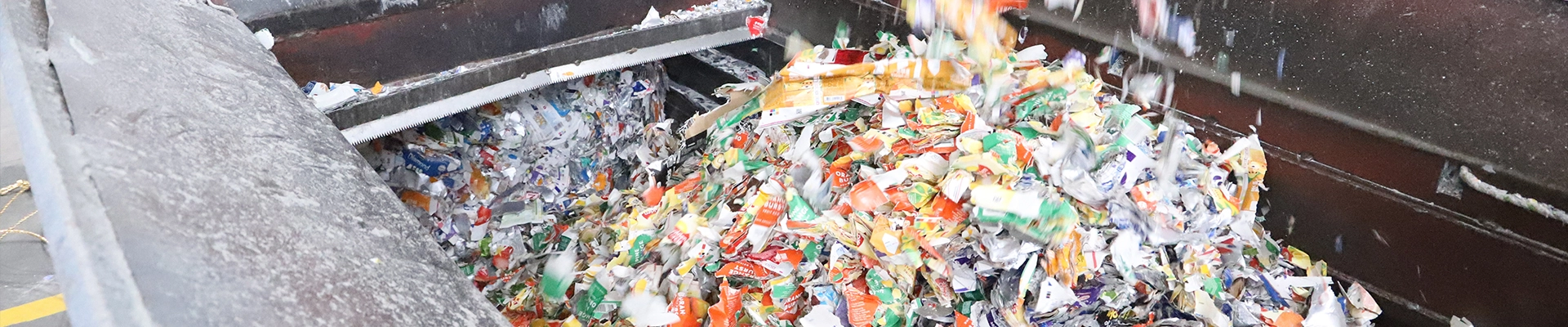
Value Of Plastic Coated Paper Recycling Equipment
Plastic-coated paper recycling is no longer a niche demand; it has become a structural necessity in modern waste management. From food packaging and shopping bags to industrial moisture-proof wrapping and takeaway containers, plastic laminated paper products are increasing year after year. The challenge is not collection — it is separation. The tight bonding between paper fiber and PE film makes traditional recycling lines inefficient, unstable, and often unprofitable. This is precisely where specialized plastic-coated paper recycling equipment demonstrates its true engineering value.
One of the defining features of this equipment is its high-torque pre-shredding module. Laminated paper materials are tougher than ordinary paper because of the bonded plastic layer. The shredding unit uses low-speed, high-torque cutting shafts made from wear-resistant alloy steel. This design minimizes dust generation while ensuring uniform particle size, which directly improves pulping efficiency. Uniform feed size reduces rotor stress inside the pulper and lowers energy fluctuation, resulting in smoother operation and longer equipment lifespan.
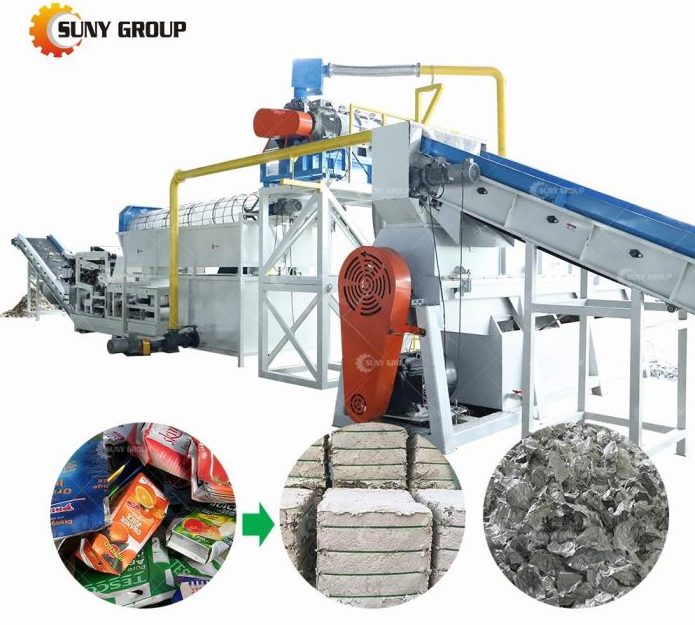
The pulping system itself is the technical core of the entire line. Instead of relying on excessive mechanical force, the equipment applies optimized rotor geometry, controlled temperature, and calibrated retention time to gradually loosen the bond between fiber and film. The purpose is not to destroy the plastic layer but to detach it cleanly. When plastic is shredded into tiny fragments, it becomes difficult to remove and lowers pulp purity. By maintaining film integrity during separation, the system ensures that plastic can be extracted in larger pieces, increasing its secondary recycling value while protecting fiber quality. This balance between force and control is what differentiates specialized recycling equipment from general-purpose systems.
Another major advantage lies in the multi-stage screening and purification design. After pulping, the slurry passes through coarse screens to remove large film pieces, followed by pressure screens that eliminate smaller contaminants. Fine screening ensures that adhesive residues and coating particles are effectively separated before pulp reaches the discharge stage. The result is high-consistency, clean pulp suitable for board production, molded pulp products, or other industrial paper applications. High pulp purity directly influences market price, making screening precision a decisive profitability factor.
The value of this equipment lies in its precision, integration, and reliability. It transforms a technically challenging waste stream into two recoverable materials with measurable economic return. In a recycling market increasingly driven by quality, consistency, and sustainability, integrated plastic-coated paper recycling systems are not merely machines — they are strategic infrastructure for long-term profitability