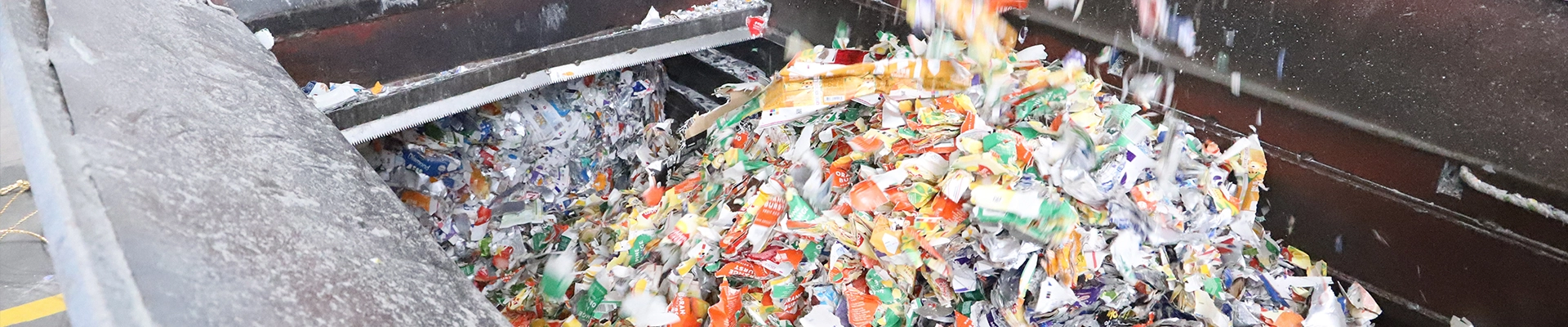
How to Recycle Tetra Pak? A Complete Guide to Beverage Carton Recycling
Tetra Pak and other aseptic beverage cartons are widely used for packaging milk, juice, beverages, and other liquid products. Their lightweight structure and long shelf life make them highly practical for manufacturers and consumers. However, recycling these cartons is more complicated than recycling ordinary paper because they are made from multiple tightly bonded material layers.
A typical Tetra Pak package contains paperboard combined with polyethylene (PE) and, depending on the packaging type, an aluminum layer. These materials need to be separated efficiently before they can be recovered and reused.
A modern Tetra Pak recycling machine provides an efficient way to process these composite cartons. By combining pulping, mechanical separation, screening, washing, and dewatering technologies, a complete recycling line can recover valuable paper fibers and separate the non-fiber fraction for further processing.
What Is Tetra Pak Recycling?
Tetra Pak recycling refers to the process of recovering useful materials from discarded beverage cartons and converting them into reusable raw materials.
Unlike conventional paper waste, beverage cartons are composite packaging materials. The paperboard provides structural strength, while plastic and aluminum layers provide moisture resistance, sealing, and barrier protection.
The main challenge is therefore not simply shredding the cartons, but breaking down the material structure and separating the different components efficiently.
A properly designed Tetra Pak recycling line can process collected beverage cartons continuously and transform them into separated material streams suitable for further treatment or reuse.
Why Are Tetra Pak Cartons Difficult to Recycle?
The main difficulty comes from their multilayer structure.
During recycling, the paper fibers need to be released from the plastic and aluminum components without unnecessarily damaging the recoverable materials.
Several factors can affect the recycling process:
- Multiple material layers are tightly bonded together
- Paper fibers absorb water during pulping
- Plastic films can remain attached to paper fibers
- Aluminum-containing packaging requires additional separation considerations
- Moisture must be removed before the recovered materials can be transported or further processed
For this reason, a conventional paper recycling system may not be suitable for processing large quantities of beverage cartons.
How Does a Tetra Pak Recycling Machine Work?
A complete recycling system normally combines several stages rather than relying on a single machine.
The exact equipment configuration depends on the raw material, required capacity, final product requirements, and degree of separation required.
1. Feeding and Material Preparation
Collected Tetra Pak cartons are first introduced into the recycling line through a feeding system.
The feeding equipment provides a controlled and continuous supply of material to the pulping section. Depending on the plant design, preliminary sorting or size reduction may be carried out before pulping.
Consistent feeding is important because it helps maintain stable operating conditions throughout the recycling process.
2. Hydropulping
The prepared cartons enter the pulping equipment, where water is added to the material.
Mechanical agitation and friction gradually loosen the paper fibers from the composite structure. The paperboard absorbs water and becomes dispersed into a fiber suspension, while larger plastic and aluminum-containing pieces remain in the coarse fraction.
This stage is particularly important because the objective is to release the paper fibers without relying on aggressive chemical treatment.
3. Screening and Fiber Separation
After pulping, the material mixture enters the separation and screening section.
The equipment separates the fiber suspension from larger non-fiber materials. Screen openings and mechanical separation forces help control which particles pass through the system.
The recovered paper fiber can then be transferred to the subsequent pulp treatment and dewatering stages.
Meanwhile, plastic and other residual materials are discharged separately for further processing.
4. Pulp Treatment and Dewatering
The separated paper fiber contains a significant amount of water after pulping and screening.
A dewatering system or filter press can therefore be used to reduce the moisture content of the recovered pulp.
The resulting material can be formed into relatively dry pulp cakes or another suitable form according to the downstream requirements.
The recovered pulp can then be transported to paper mills or other facilities for further utilization.
5. Plastic and Non-Fiber Material Processing
The non-fiber fraction separated from the pulping system can contain plastic and aluminum-containing materials.
Further screening, separation, washing, or dewatering equipment can be incorporated depending on the desired output.
For applications where plastic recovery is required, the recovered plastic fraction may be processed further through drying, granulation, or pelletizing systems.
The final equipment configuration should be selected according to the composition of the incoming Tetra Pak waste and the customer’s target products.
Main Equipment in a Tetra Pak Recycling Line
A complete paper plastic separation machine is normally part of an integrated recycling system rather than an isolated piece of equipment.
Depending on the project requirements, a typical system may include:
- Feeding conveyor
- Hydropulper
- Horizontal separator
- Pulp and slag separation equipment
- Screening equipment
- Dewatering machine
- Filter press
- Water circulation system
- Conveying equipment
- Electrical control system
Not every project requires the same configuration. Equipment selection should be based on the customer’s raw material and production objectives.
What Materials Can Be Processed?
A Tetra Pak recycling system can be designed for different types of paper-plastic composite waste.
Potential feedstocks include:
- Tetra Pak cartons
- Milk cartons
- Juice cartons
- Aseptic beverage packaging
- Coated paper
- Paper cups
- Paper bags with plastic liners
- Other paper-plastic composite packaging
The actual processing capability depends on the material composition and the selected equipment configuration.
For this reason, testing the customer’s actual waste material before finalizing a recycling line can be valuable.
What Are the Recovered Materials Used For?
One of the main advantages of composite packaging recycling is that different material fractions can be recovered for different applications.
Recovered Paper Fiber
The paper fibers separated from beverage cartons can be processed into pulp and supplied to paper mills.
Depending on fiber quality and downstream processing, recovered fibers may be used in the production of:
- Corrugated paper
- Cardboard
- Packaging paper
- Other recycled paper products
Recovered Plastic
The separated plastic fraction can be further processed through drying and pelletizing equipment when suitable.
Recycled plastic pellets can then serve as raw material for various plastic products, depending on the material composition and quality.
Aluminum-Containing Fraction
For Tetra Pak materials containing aluminum, the aluminum-containing fraction can be collected separately for further processing.
The appropriate recovery method depends on the composition of the incoming cartons and the customer’s requirements for the final recovered materials.
Benefits of an Automated Tetra Pak Recycling Line
Continuous Processing
An integrated production line can continuously process incoming composite packaging, reducing the need for manual intervention between individual processing stages.
Reduced Manual Labor
Automated feeding, separation, conveying, and control systems can reduce dependence on manual material handling.
Efficient Material Recovery
Separating paper fibers from non-fiber materials allows different recovered fractions to be directed toward their appropriate downstream applications.
Water Recycling
A properly designed system can incorporate water circulation and filtration to reduce fresh-water consumption during the recycling process.
Flexible Configuration
The equipment layout and processing stages can be customized according to raw material composition, capacity, factory space, and final product requirements.
How to Choose the Right Tetra Pak Recycling Machine?
Before investing in a Tetra Pak recycling machine, several factors should be evaluated.
1. Raw Material Composition
Different beverage cartons can contain different material structures and percentages of paper, plastic, and aluminum.
Providing representative samples of the actual waste can help engineers determine the appropriate processing technology.
2. Processing Capacity
The required capacity may range from a small recycling system to a large industrial-scale production line.
Capacity should be determined according to the daily or hourly availability of waste rather than simply selecting the largest machine available.
3. Desired Final Products
The required separation level depends on what the customer intends to sell or reuse.
For example, a paper mill may prioritize high-quality recovered pulp, while a recycling company may require additional processing of the plastic fraction.
4. Factory Layout
The available installation area, material flow, equipment height, and access for maintenance should all be considered when designing the production line.
5. Water and Energy Requirements
Water circulation, motor power, dewatering efficiency, and wastewater management can all influence the operating cost of the plant.
A customized engineering solution can help balance production capacity with operating expenses.
Why Choose a Customized Paper-Plastic Separation System?
There is no single recycling configuration that is suitable for every Tetra Pak recycling project.
The ideal system depends on:
- Type of composite packaging
- Material composition
- Moisture content
- Required capacity
- Desired separation efficiency
- Final product requirements
- Available factory space
- Local utility conditions
Therefore, a professional recycling equipment manufacturer should evaluate the raw material and production requirements before recommending the final equipment configuration.
Conclusion
Recycling Tetra Pak is more complex than processing conventional waste paper because beverage cartons contain multiple bonded material layers. Efficient recycling requires controlled pulping, mechanical separation, screening, and dewatering to recover the useful components.
A properly configured Tetra Pak recycling machine or paper plastic separation machine can help recycling facilities process beverage cartons continuously and recover valuable paper fibers and non-fiber materials.
For projects involving Tetra Pak, beverage cartons, coated paper, or other composite packaging, the recycling line can be customized according to the raw material, capacity, factory layout, and required final products.
Frequently Asked Questions
Can a Tetra Pak recycling machine process other composite packaging?
Yes. Depending on the equipment configuration, the system can be designed to process various paper-plastic composite materials, including beverage cartons, coated paper, paper cups, and paper bags with plastic liners.
What are the main recovered products from Tetra Pak?
The main recovered materials can include paper fibers and a non-fiber fraction containing plastic and, depending on the packaging structure, aluminum-containing material.
Does Tetra Pak recycling require chemicals?
The pulping and separation process primarily relies on water and mechanical action. The exact process configuration depends on the raw material and required product quality.
Can the recycling line be customized?
Yes. Capacity, equipment configuration, layout, separation requirements, and downstream processing can be customized according to the customer’s project requirements.
What information is needed for a recycling line quotation?
Customers should provide information such as the type of Tetra Pak or composite packaging, available quantity, required processing capacity, desired recovered products, and factory space. Material samples or photos can also help engineers evaluate the appropriate solution.