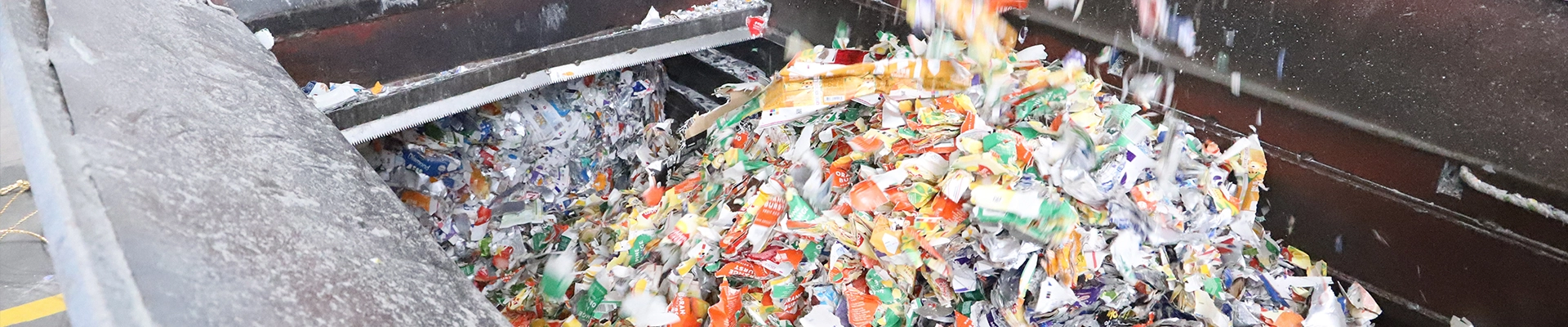
Milk Carton Recycling Machine: How to Separate Paper and Plastic
Milk cartons are not made from paper alone. Many beverage cartons are composite packaging materials that combine paperboard with plastic and, in some applications, a thin aluminum layer. Because these materials are bonded together, recycling them requires more than conventional paper sorting.
A milk carton recycling machine can be part of a recycling system designed to separate paper fibers from plastic or aluminum-containing materials. For recyclers, paper mills, and waste-processing companies, the key is to use suitable separation and pulp-processing equipment to recover valuable materials efficiently.
SUNY GROUP manufactures paper plastic separation equipment and recycling production lines designed to separate plastic or aluminum from waste paper and recover the materials for further use.
Are Milk Cartons Paper or Plastic?
Milk cartons are generally considered composite packaging rather than a single-material product.
Some aseptic beverage cartons also contain a thin aluminum layer for additional protection. For more information about carton packaging materials and their functions, see Tetra Pak’s official packaging information
This creates an important recycling challenge: the paper fibers need to be separated from the non-paper components before they can be processed and reused.
Therefore, simply placing a milk carton into a conventional paper recycling process does not describe the complete industrial recycling process. Specialized equipment may be required to process the composite material and separate the different components.
How Does a Milk Carton Recycling Machine Work?
In an industrial recycling system, a milk carton recycling machine is normally integrated with pulping, separation, screening, and dewatering equipment.
The exact process depends on the material composition, contamination level, required output, and desired capacity. In an industrial recycling system, the general process can include:
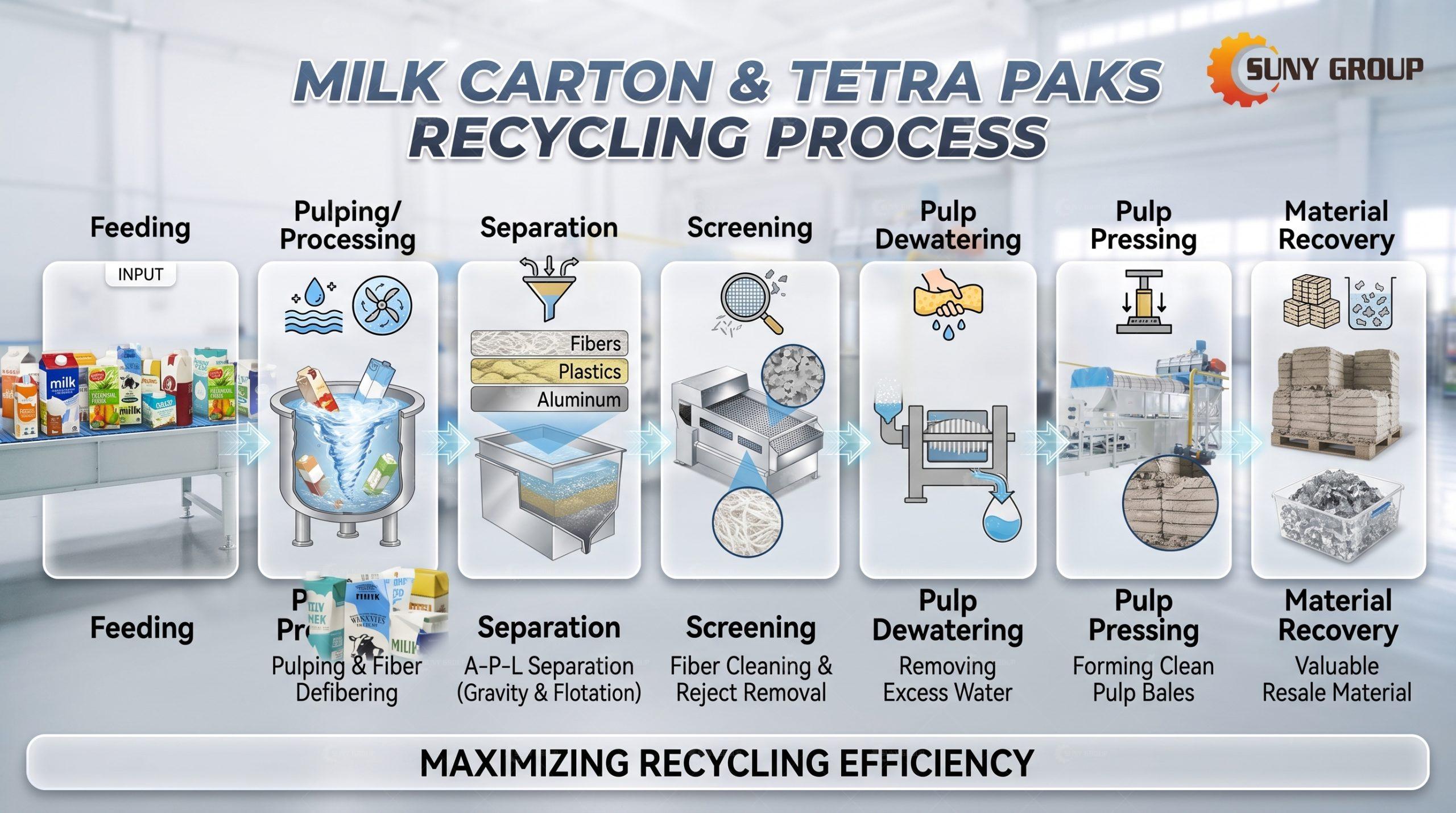
Feeding → Pulping/Processing → Separation → Screening → Pulp Dewatering → Pulp Pressing → Material Recovery
The objective is to recover usable paper fibers while separating plastic, aluminum, and other unwanted materials.
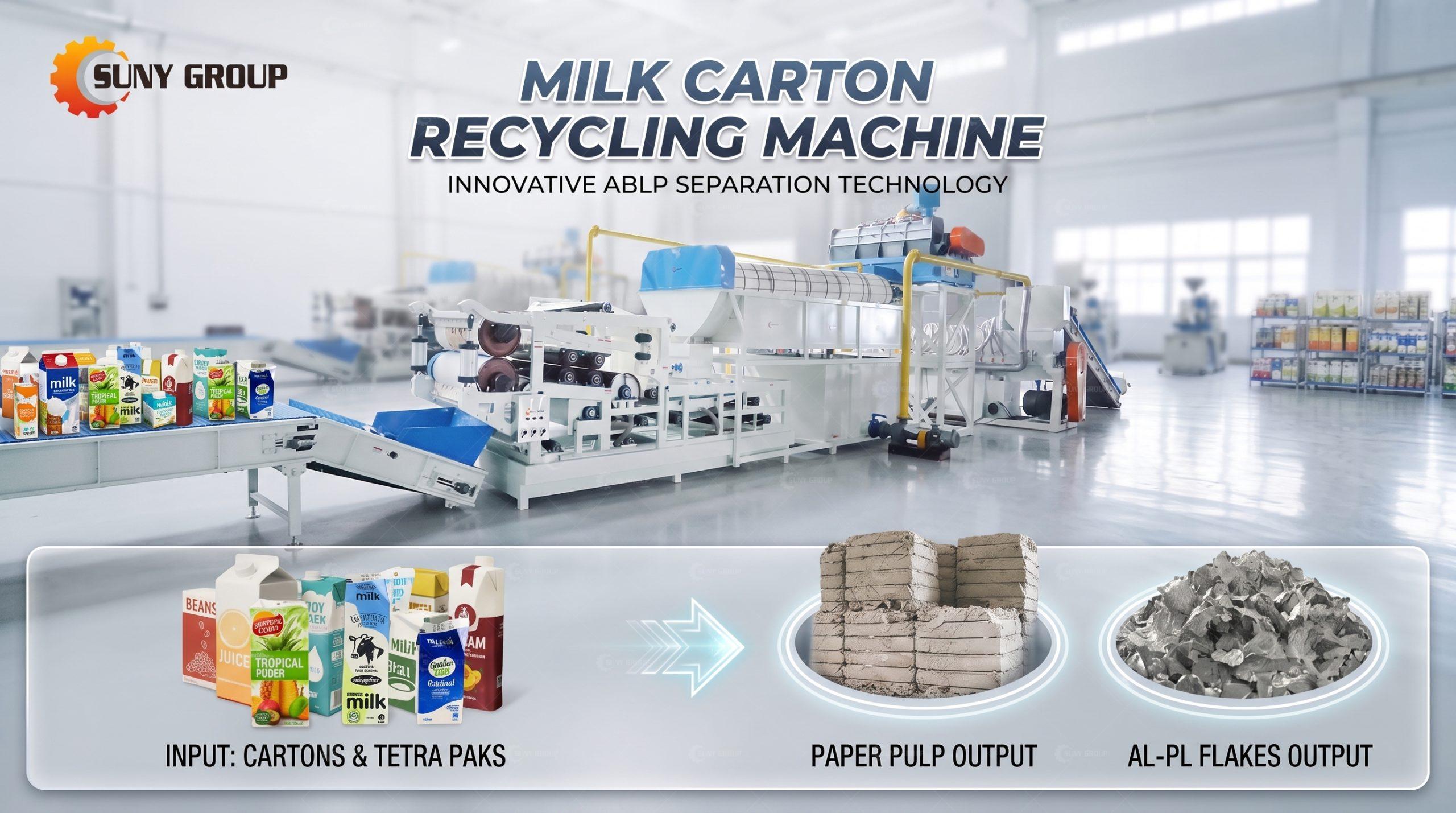
SUNY GROUP’s Paper Plastic Separator recycling production line was developed to address scrap disposal problems in paper mills. According to SUNY GROUP, the equipment can separate plastic or aluminum from waste paper and maximize material recovery.
Paper Plastic Separation for Composite Packaging
The separation principle is especially important when processing laminated or composite paper materials.
SUNY GROUP lists several suitable material applications for its paper plastic separation equipment, including:
- Laminated paper
- Bulk paper
- Kraft cardboard
- Trimmed paper edges
- Sanitary napkins and diapers
- Paper-plastic composite woven bags
The equipment configuration can be selected according to the characteristics of the raw material and the required processing capacity.
Therefore, when selecting recycling equipment for milk cartons and similar composite packaging, the appropriate configuration should be determined based on the carton’s actual structure, the condition of the raw materials, and the required output and target capacity, rather than relying on a “one-size-fits-all” solution.
Main Parameters of the Paper Plastic Separator Machine
SUNY GROUP provides several configurations for different applications.
For the paper mill application, the listed main motor power is 110 kW, with a rated speed of 380–560 r/min. The sieve diameter and screen thickness can be customized according to requirements. The listed raw material handling capacity is 150–200 tons per 24 hours.
For laminated paper, bulk paper, kraft cardboard, trimmed edges, sanitary napkins and diapers, the listed main motor power range is 75–132 kW, with a raw material handling capacity of approximately 1.5–3.5 t/h.
For paper-plastic composite woven bags, the listed main motor power is 55 kW, with a listed handling capacity of approximately 11,000–11,500 bags/h.
The listed outlet size is 800 × 800 mm, while the outlet diameter is 220 × 2 mm. The standard equipment footprint shown on the product page is approximately 1800 × 8000 mm, with an overall height of 3300 mm.
Because the product page specifies that some parameters can be customized, recyclers should provide their raw material and capacity requirements before selecting a final configuration.
Pulp Filter for Further Material Recovery
A complete paper recycling system may require additional equipment after the main separation process.
SUNY GROUP’s pulp filter is designed to remove light and heavy impurities during waste-paper pulping. According to the product information, it can also break down small pieces of paper into fibers while reducing the risk of screen blockage.
The equipment is mainly used for sorting tail pulp after a fiber separator and pressure screen. The treated slurry can then be returned to the fiber separator or the slurry pool for reuse.
This type of equipment can therefore be integrated into a larger pulp-processing system where fiber recovery and impurity removal are important.
Pulp Dewatering and Pressing
After separation and pulp processing, the recovered pulp may still contain a significant amount of water.
SUNY GROUP provides pulp dewatering equipment with several models. The listed TS-200 model has a 0.75 kW motor and a listed output of 500 kg, while the TS-300, TS-400 and TS-500 models provide progressively higher listed outputs up to 1,300 kg.
SUNY GROUP also provides a pulp filter press. Its function is to mechanically dewater and compact recovered pulp. The pulp is transported onto polyester blankets and squeezed through multiple pressing rollers.
According to SUNY GROUP, the resulting material can be formed into cardboard for secondary utilization, while filtered water can be pumped back for recycling.
This means that a paper plastic recycling system does not necessarily stop at material separation. Dewatering and pressing can also be important parts of the overall recycling process.
Paper Plastic Recycling Machine Capacity
SUNY lists several complete production-line models under its PPR series:
| Model | Power | Dimension | Capacity |
|---|---|---|---|
| PPR-1000 | 430 kW | 33,000 × 14,000 × 5,000 mm | 800–1,000 kg/h |
| PPR-3000 | 670 kW | 44,000 × 14,000 × 5,000 mm | 2,500–3,000 kg/h |
| PPR-5000 | 1,190 kW | 40,000 × 30,000 × 5,000 mm | 4,500–5,000 kg/h |
These are the capacities and configurations published by SUNY for its PPR production line. Actual system selection should be based on the customer’s feedstock, target output, operating conditions, and required recovery process.
What Materials Can a Paper Plastic Separator Process?
A paper plastic separator is not limited to one type of waste material.
Depending on the configuration, SUNY’s published applications include laminated paper, bulk paper, kraft cardboard, trimmed paper edges, sanitary napkins, diapers, and paper-plastic composite woven bags.
For composite packaging such as milk cartons, the important consideration is the composition of the incoming material. A recycling solution should be designed around the actual combination of paper fibers, polymers, aluminum and contaminants present in the feedstock.
For this reason, recyclers planning a milk carton recycling machine project should provide information about their raw material before purchasing equipment.
How to Choose a Milk Carton Recycling Machine
Before selecting a recycling machine, consider the following factors:
1. Raw Material
Provide representative samples or detailed information about the milk cartons or other composite packaging you want to process.
2. Processing Capacity
Determine whether you need a small processing system or an industrial recycling line with a capacity of several tons per hour.
3. Material Separation Requirements
Clarify whether your objective is primarily paper fiber recovery or whether plastic and aluminum recovery are also required.
4. Final Product
The desired output affects the equipment configuration. Recovered pulp, separated plastic, aluminum-containing material, and other fractions may require different downstream processing.
5. Factory Space
A complete recycling line can require substantial installation space. SUNY’s published PPR systems have large footprints, so the available workshop area should be considered during project planning.
Conclusion
Milk cartons are composite packaging materials, so industrial recycling requires a process that can handle the different components rather than treating the carton as ordinary paper or plastic.
A Milk Carton Recycling Machine can be part of a larger recycling system designed to process composite paper materials and separate paper fibers from plastic or aluminum components. SUNY GROUP’s Paper Plastic Separator Machine is designed for separating plastic or aluminum from waste paper, with configurable equipment and additional pulp filtration, dewatering, and pressing equipment available for complete recycling systems.
If you are planning a milk carton, Tetra Pak, laminated paper, or other composite packaging recycling project, the appropriate machine configuration should be determined from the raw material, required capacity, desired output, and factory conditions.
Contact SUNY GROUP with your raw material type, required capacity, and recycling requirements to discuss a suitable paper plastic separation solution.