How to Effectively Recycle Plastic-Coated Kraft Paper Waste?(2026 Guide)
If you are wondering how to effectively recycle plastic-coated kraft paper waste, you are not alone. Materials like coated paper, kraft paper bags, and paper-plastic composite woven bags present a unique recycling challenge due to their tightly bound polymer and paper layers.
To achieve high recovery rates without damaging the material, industrial facilities require specialized equipment. This guide explores the fully automated Paper- Plastic Recycling Plant designed to separate and recycle these complex composite materials.
The Challenge of Paper-Plastic Composite Waste
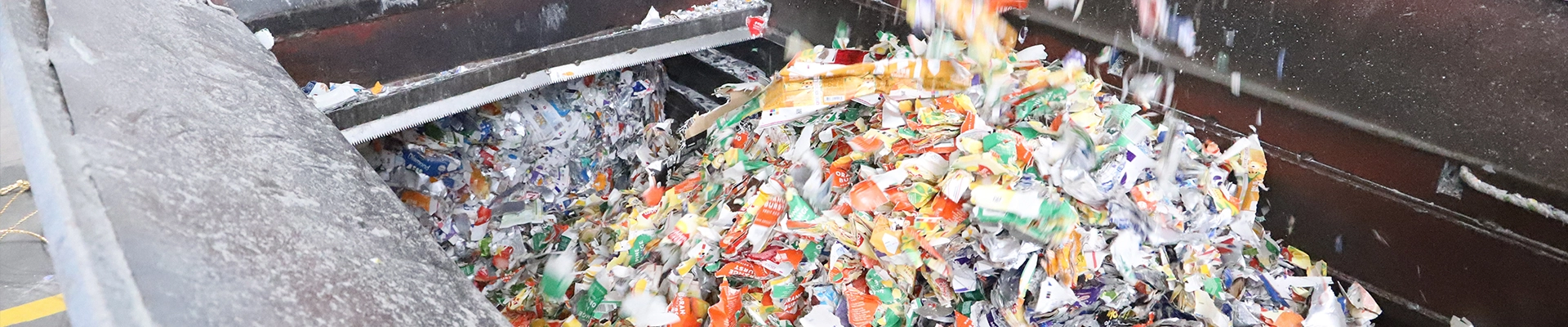
Many industrial packaging materials, such as laminated paper, tetra paks, and plastic-coated kraft paper bags, combine paper fibers with plastic film (and sometimes aluminum) to improve durability. While excellent for packaging, these layers must be effectively delaminated for industrial reuse.
Traditional methods often damage the fiber quality or leave excessive debris. However, modern automated recycling lines can separate these materials cleanly and efficiently.
The Ultimate Solution: Paper-Plastic Recycling Machine
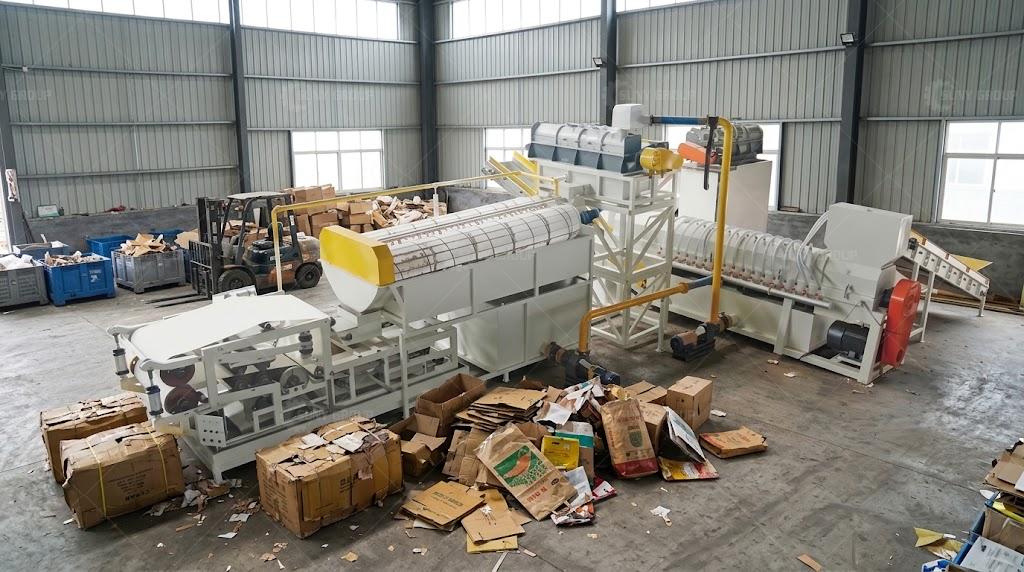
To effectively recycle plastic-coated kraft paper waste, investing in an integrated recycling plant is the most reliable solution. The machine integrates crushing, pulping, separation, and drying into a fully automated process.
By using a specialized, low-energy, closed-loop water system without chemical additives, this technology effectively delaminates paper and polymer layers without damaging fiber quality.
Key Performance Metrics:
- Paper fiber recovery rate: ≥ 95%
- Plastic reusability rate: ≥ 90%
- Final Products Output: High-purity paper pulp, plastic pellets, and aluminum.
Step-by-Step Working Process
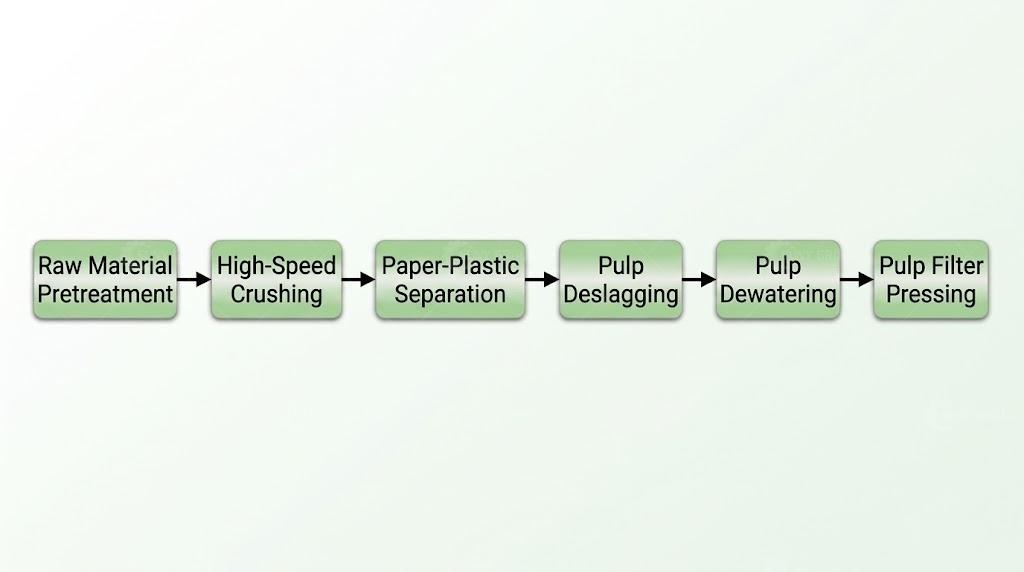
The complete recycling line utilizes a seamless workflow: raw material pretreatment → high-speed crushing → paper-plastic separation → pulp deslagging → pulp dewatering → pulp filter pressing.
Here is how the core machine components function:
1. Paper-Plastic Separator
This is the heart of the recycling plant. According to the characteristics of paper-plastic composite materials, the separator adds water and uses the friction of the main shaft screen plate rotating at high speeds to separate the paper-plastic mixture.
2. Pulp-Slag Separator
This machine removes light and heavy debris and decomposes small pieces of paper in the fiber without blocking or damaging the screen plate. This ensures continuous operation, meaning the factory does not need to stop frequently for cleaning.
3. Pulp Dewatering Machine
Featuring a simple structure and easy operation, this machine allows particles to fall by gravity and filter through a screen to form a sieve. By replacing the screen, you can obtain materials of different particle sizes according to your technological requirements.
4. Pulp Filter Press
Developed specifically for recycling the pulp generated by the paper-plastic separator, this equipment uses a motor-driven spindle and a pump to evenly distribute the pulp onto a polyester blanket for final pressing.
Production Capacity and Applications
Whether you are managing a waste paper recycling plant, a pulp mill, or a packaging waste treatment facility, the equipment can be tailored to your volume.
- Custom Configurations: Customers can choose capacities of 500 kg/h, 1 t/h, or large-scale production lines exceeding 3–5 t/h.
- Versatile Applications: Beyond coated kraft paper, the plant successfully processes milk cartons, tetra paks, disposable paper cups, label liner, and even medical waste packaging.
Environmental Benefits of the Process
When you choose to recycle plastic-coated kraft paper waste using our advanced machinery, you are not just improving factory efficiency, but also contributing to a circular economy. The ability to recycle plastic-coated kraft paper waste without harmful chemicals reduces water pollution and lowers carbon emissions significantly compared to traditional landfill disposal methods.
Transform Your Recycling Process Today
Effectively recycling plastic-coated kraft paper waste requires the right technology to maximize pulp recovery rates while minimizing operational costs. With 20 years of experience in research and manufacturing, Suny Group provides custom solutions tailored to your material and output demands.
Ready to upgrade your facility? Explore the Paper- Plastic Recycling Plant today to get a customized quote tailored to your specific production needs.
Frequently Asked Questions (FAQs)
How do you separate plastic from kraft paper waste?
To separate plastic from kraft paper waste, use a specialized paper-plastic separator. This machine uses a closed-loop water system and high-speed friction to delaminate the polymer and paper layers without using harmful chemicals, ensuring high fiber quality.
What is the recovery rate of paper-plastic recycling machines?
Advanced paper-plastic recycling plants can achieve a paper fiber recovery rate of over 95% and a plastic reusability rate of over 90%, outputting high-purity paper pulp and plastic pellets.